
![How to Migrate Shopify to Magento [Video]](https://www.shopping-cart-migration.com/wp-content/uploads/c2c_blog_featured1.png)
Shopify is a hosted e-Commerce solution with rich features, numerous free templates and CMS capabilities. While a robust platform, it offers less inherent flexibility and a more curated app ecosystem compared to open-source alternatives. These are main reasons why e-merchants decide to migrate their Shopify stores to Magento (now Adobe Commerce). The Magento (now Adobe Commerce) platform is an open-source solution. It means you get access to its source code and can modify some features according to your needs. As a result your platform becomes more flexible.
With Cart2Cart migration from Shopify to Adobe Commerce (Magento) will be fast, accurate and straightforward. The process is fully automated, so you don’t need programming skills. Before performing Shopify migration make sure you:
- installed desirable Adobe Commerce (Magento) store;
- have access to Store Admin panel and FTP;
- estimated price of migration;
- to ensure data security, we recommend implementing a robust backup strategy.
Watch our video tutorial to make your migration process easier.
Now you have to follow an easy step by step instruction:
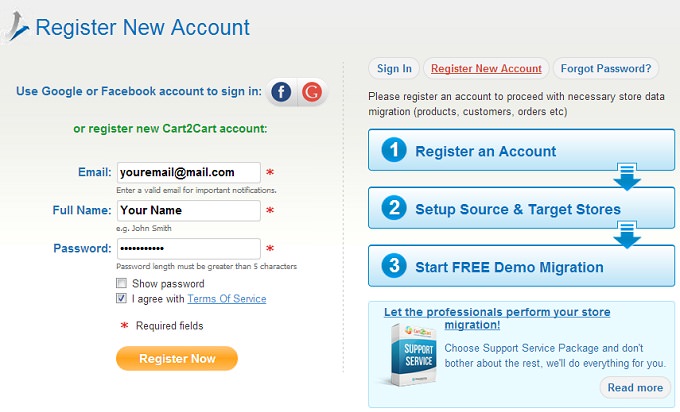
Stage 1. Create Cart2Cart account
You have to register a new Cart2Cart account or sign in with your existing Google or Facebook account.
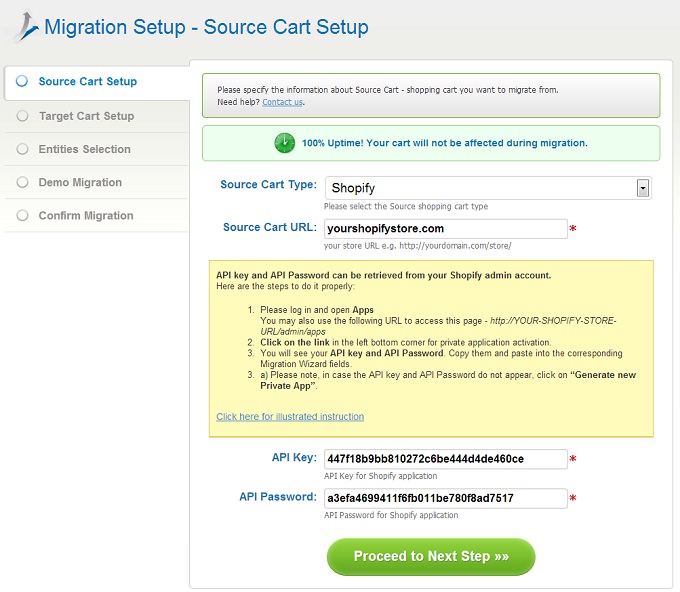
Stage 2. Pick Your Source Cart
From drop-down menu you have to choose Shopify. Then enter your current online store’s URL. The next thing you have to perform is provide API credentials from your Shopify shop. Typically, these can be generated in the Shopify admin panel, often under 'Apps' or 'Settings' related to app development or API access. While the exact steps may vary with Shopify updates, look for options to manage private apps or API keys.
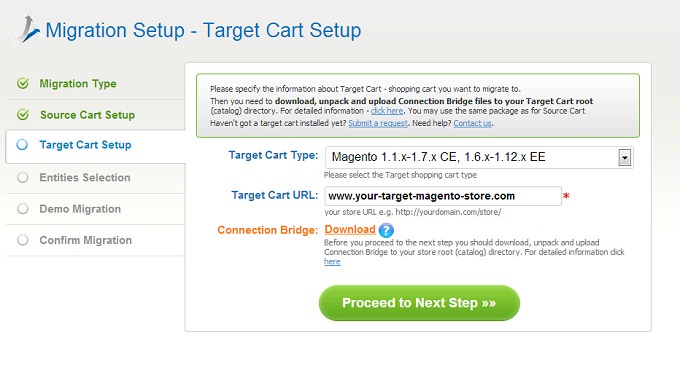
Stage 3. Pick Your Target Cart
Select Adobe Commerce (Magento) as your Target Cart from a menu. Then enter Magento shop’s URL. The next thing you have to perform is Connection Bridge installation. To do that you have to:
- download Connection Bridge
- extract it from zip archive
- paste it to the root directory with the help of FTP client
In order to make your Connection Bridge set up easier we recommend to look through our FAQ.
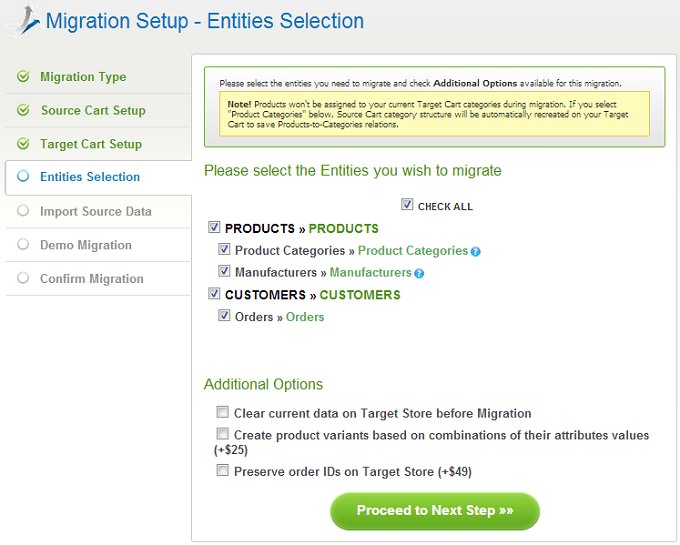
Stage 4. Entities Selection
At this point, you are able to pick entities, which have to be migrated to Adobe Commerce (Magento) (products, orders, customers or all together). You can also opt to preserve IDs for these entities. You will also have a possibility to select additional options in order to expand migration functions. bear in mind these options are for additional cost.
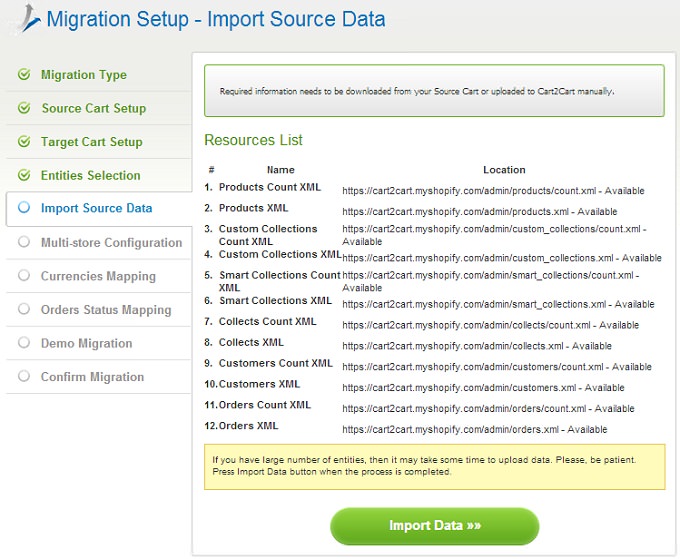
Stage 5. Import Source Data
On this step, Cart2Cart uploads information automatically, so you can just press Import Data button.
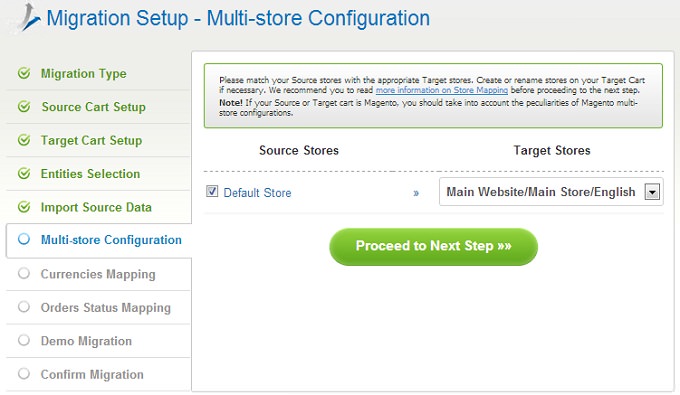
Stage 6. Multi-store Configuration
Since Adobe Commerce (Magento) supports multi-store functionality, you are able to map target and source stores.
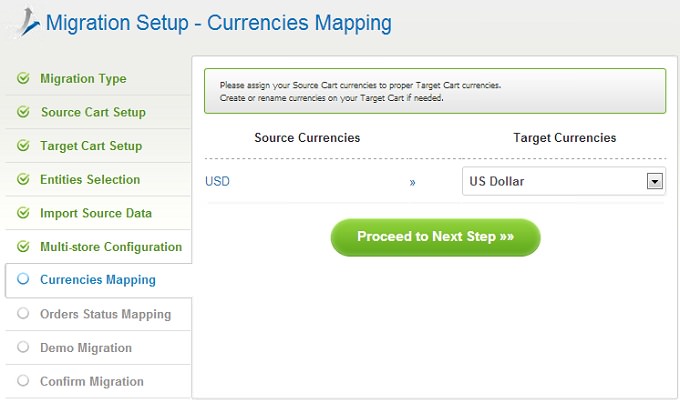
Stage 7. Currencies Mapping
If you use more than one language to sell your products, Cart2Cart provides an opportunity to move them as well.
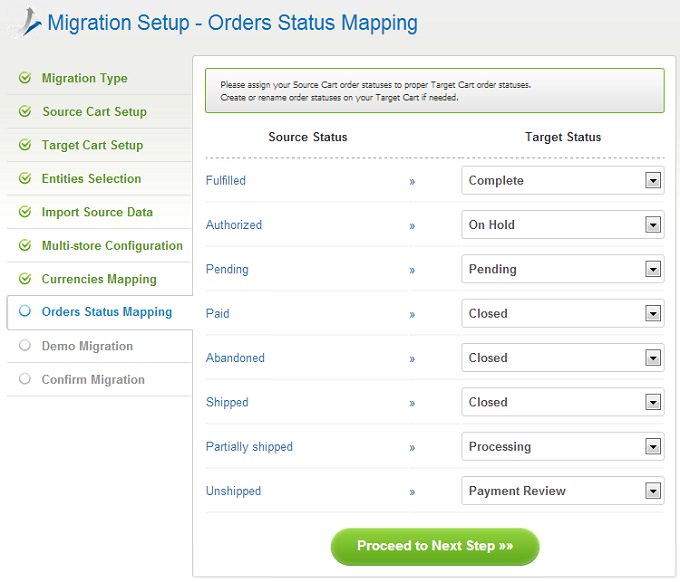
Stage 8. Map Order Statuses
Order migration may require order statuses mapping. At this point you can perform that.
Stage 9. Demo Migration
On this step, you are able to try how everything works and evaluate results. We highly recommend not to skip this step. Moreover it will take only a few minutes.
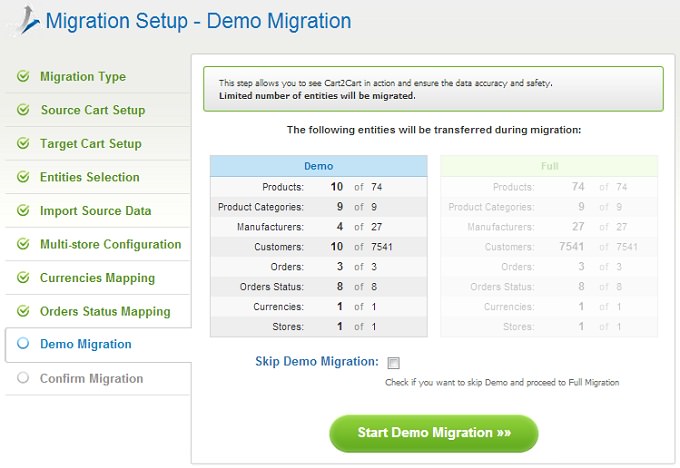
Stage 10. Full Migration
The final step is Full Migration. Make sure you have enough cash on your account, double check entities and press Start Full Migration button. After migration is completed, you will receive an email notification.
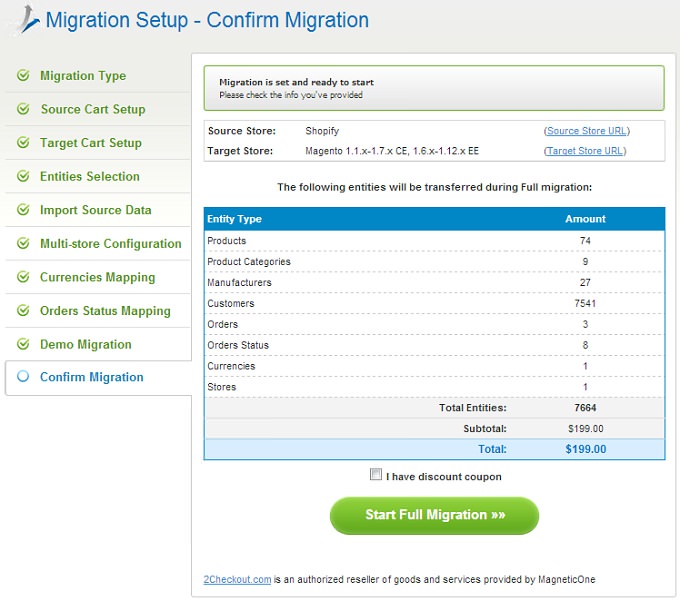
After migration is finished, you can check result. Now you are owner of newly established Adobe Commerce (Magento) store.
Monthly Update – March 2026
As of March 2026, the landscape of e-commerce platform migration continues to evolve rapidly, particularly for those transitioning from Shopify to Adobe Commerce (formerly Magento). This month, we highlight the strategic advantage of prioritizing a scalable infrastructure and robust security measures during your re-platforming project. With increasing cyber threats and the demand for high-performance online stores, ensuring your new Adobe Commerce environment is optimized for speed, stability, and data protection is paramount. This includes implementing a content delivery network (CDN), optimizing database performance, and configuring advanced security protocols. Proactive planning in these areas not only mitigates potential risks but also lays a strong foundation for future growth and seamless scalability, allowing your business to adapt quickly to market demands and maintain customer trust. A successful migration in today's environment is defined not just by data integrity, but by the resilience and security of your entire digital commerce ecosystem.
For more details, explore our FAQ section or schedule a call with a migration expert.