

digiSHOP to Shopware Migration - Step-by-Step Guide & Expert Services
Planning a digiSHOP to Shopware migration? Cart2Cart makes it easy to move your digiSHOP store to Shopware. Our service ensures a swift, secure, and complete transfer data, safeguarding your precious SEO and maintaining zero downtime for your business. Discover our detailed step-by-step guide for a seamless switch from digiSHOP to Shopware independently, or opt for our expert assistance for a fully managed process. Experience a flawless digiSHOP to Shopware migration with confidence.
What data can be
migrated from digiSHOP to Shopware
-
Products
-
Product Categories
-
Manufacturers
-
Customers
-
Orders
- Name, ID, SKU, Short Description, Full Description, Manufacturer, Tax Class .
- Special Price .
- Meta Title, Meta Keywords, Meta Description.
- Quantity, Stock Availability.
- Weight.
- Options(Name).
- Name, Status.
- Meta Title, Meta Description, Meta Keywords.
- Name.
- ID, Newsletter.
- Customer Billing Address.
- ID, Order Date, Order Status, Order Products(Final Price, Tax Value, Name), SubTotal Price, Discount Price, Tax Price, Shipping Price, Total Price.
- Customer Name, Email, Billing Address.
- Shipping Address.
- Name, ID, SKU, Short Description, Full Description, Manufacturer, Tax Class .
- Special Price .
- Meta Title, Meta Keywords, Meta Description.
- Quantity, Stock Availability.
- Weight.
- Options(Name).
- Name, Status.
- Meta Title, Meta Description, Meta Keywords.
- Name.
- ID, Newsletter.
- Customer Billing Address.
- ID, Order Date, Order Status, Order Products(Final Price, Tax Value, Name), SubTotal Price, Discount Price, Tax Price, Shipping Price, Total Price.
- Customer Name, Email, Billing Address.
- Shipping Address.
Products
Estimate your Migration Cost
To check your digiSHOP to Shopware migration price, click the button below. The migration price varies in accordance with the number of data types and the additional migration options selected.
How to Migrate from digiSHOP to Shopware In 3 Steps?
Connect your Source & Target carts
Choose digiSHOP and Shopware from the drop-down lists & provide the stores’ URLs in the corresponding fields.
Select the data to migrate & extra options
Choose the data you want to migrate to Shopware and extra options to customise your digiSHOP to Shopware migration.
Launch your Demo/Full migration
Run a free Demo to see how the Cart2Cart service works, and when happy - launch Full migration.
Migrate digiSHOP to Shopware: The Ultimate 2024 Guide
Seamlessly Migrate Your E-commerce Store from digiSHOP to Shopware
As your online business evolves, so too do your platform needs. If you're currently operating on digiSHOP and looking for a robust, scalable, and feature-rich platform to propel your growth, then migrating to Shopware is an excellent strategic move. Shopware offers advanced customization, strong performance, and a vibrant ecosystem that can significantly enhance your store's functionality and user experience.
This comprehensive guide will walk you through the entire process of transitioning your valuable store data from digiSHOP to Shopware. Due to the nature of digiSHOP as a source platform, the migration will leverage a CSV file export/import method, ensuring that all your essential entities like products, customers, and orders are transferred with precision and data integrity. Let's dive into how you can make this replatforming a smooth and successful journey.
Prerequisites for a Successful Migration
Before initiating your data transfer, adequate preparation of both your source digiSHOP store and your target Shopware environment is crucial. This proactive approach minimizes potential issues and ensures a seamless transition.
For Your digiSHOP (Source) Store:
- Data Export: Since digiSHOP does not offer a direct API connection for automated migration, you will need to export your store data into CSV files. Ensure you export all critical entities, including products (with their variants, SKUs, and images), product categories, customer records, order history, manufacturers, reviews, and CMS pages.
- Data Cleaning & Review: Before migrating, review your exported CSV files for any inconsistencies, duplicate entries, or outdated information. Cleaning your data now will save significant time and effort post-migration.
- Complete Backup: Always perform a full backup of your digiSHOP store's database and files before exporting any data. This provides a crucial safeguard in case any unforeseen issues arise. For more details, refer to our guide on How to prepare Source store for migration?
For Your Shopware (Target) Store:
- Fresh Shopware Installation: It is highly recommended to have a fresh, clean installation of Shopware (version 5.2.2 or 6.0.0+) on your hosting environment. This ensures there are no existing conflicts that could impede the migration.
- Hosting Environment: Verify that your hosting meets Shopware's system requirements for optimal performance post-migration.
- FTP/SFTP Access: You will need full FTP or SFTP access to your Shopware store's root directory to upload the Connection Bridge file, which is essential for establishing a secure data link. Learn more about The Short & Essential Guide to Access Credentials for Cart2Cart and What is a root folder and where can I find it?
- Cart2Cart Shopware Migration Module: Shopware requires the installation of a dedicated migration module to facilitate the data transfer.
- Target Store Backup: Even with a fresh installation, create a backup of your new Shopware store before migration to maintain a restore point. Find out more about How to prepare Target store for migration?
Performing the Migration: A Step-by-Step Guide
With your preparations complete, you are ready to initiate the data transfer from digiSHOP to Shopware. Follow these steps meticulously to ensure a smooth transition.
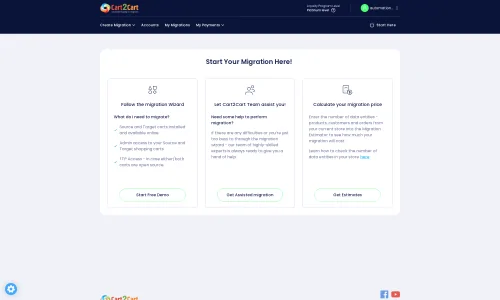
Step 1: Start Your Migration
Begin by accessing the migration wizard. If you haven't already, you'll need to create an account to start the process.
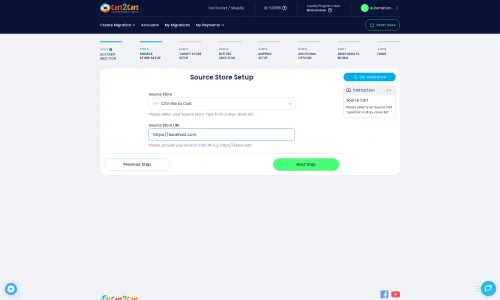
Step 2: Configure Your Source Store (digiSHOP via CSV)
This is where you'll tell the migration tool about your digiSHOP data. Select "CSV File to Cart" from the dropdown list of source platforms. You will then be prompted to upload the CSV files you prepared from your digiSHOP store. Ensure all relevant files for products, customers, orders, categories, etc., are uploaded. The system will then validate these files.
For further assistance with CSV migrations, consult our CSV.File Data Migration service page.
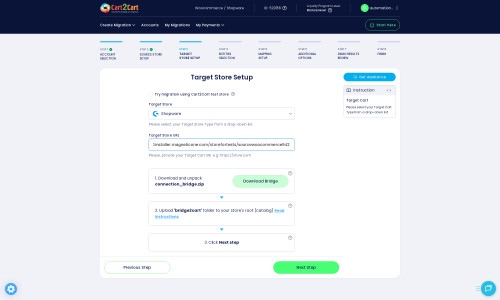
Step 3: Configure Your Target Store (Shopware)
Next, you'll set up your new Shopware store as the migration target. Select "Shopware" as your Target Cart from the dropdown menu and provide your Shopware store's URL. A critical step here is to download the Connection Bridge. Unpack the downloaded ZIP file and upload the `bridge2cart` folder to the root directory of your Shopware installation via FTP. This bridge acts as a secure data pipeline between the migration service and your new Shopware store, enabling the transfer of your e-commerce data.
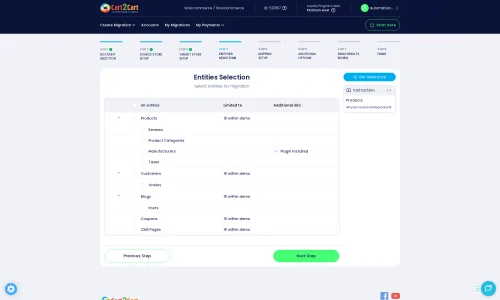
Step 4: Select Data Entities for Migration
In this crucial step, you choose exactly which data entities you want to transfer from your digiSHOP CSV files to Shopware. You can opt to migrate all available entities or meticulously select specific ones. Supported entities include:
- Products (including SKUs, descriptions, images, variants)
- Product Categories
- Products Manufacturers
- Product Reviews
- Customers
- Orders (with full order history and statuses)
- Invoices
- Taxes
- Stores
- Coupons
- CMS Pages
Step 5: Configure Additional Options & Data Mapping
This stage allows for fine-tuning your migration settings to ensure data integrity and optimize your new store's setup.
Additional Options:
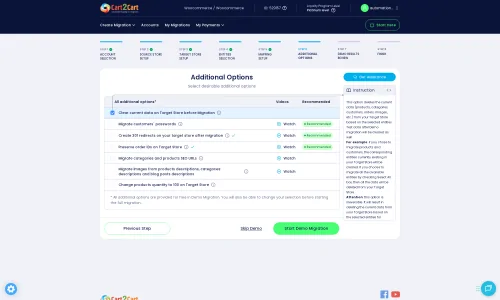
Review and select from various advanced options:
- Migrate Images in Description: Ensure product images embedded in descriptions are transferred.
- Clear Target: This option allows you to clear any existing data on your target Shopware store before the migration begins, ensuring a fresh start.
- Preserve IDs: Opt to preserve original IDs for Customers and Orders. This is vital for maintaining links with third-party systems or historical records.
- Password Migration: If supported by your digiSHOP CSV export, you can migrate customer passwords securely.
- Create 301 Redirects: A highly recommended option for SEO, this generates 301 redirects for your old product and category URLs to their new Shopware equivalents, preserving your link equity and SEO rankings.
Data Mapping:
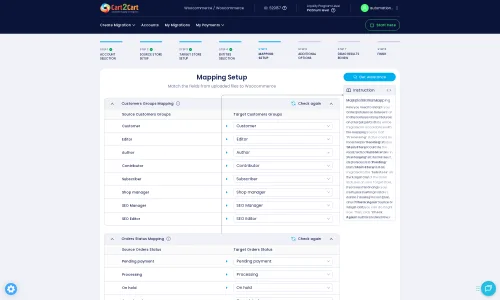
The mapping setup allows you to match customer groups and order statuses from your digiSHOP data to their corresponding fields in Shopware. This ensures consistency for customer roles and order processing workflows on your new platform.
Step 6: Run a Free Demo Migration
Before committing to the full migration, run a free demo. This allows you to migrate a limited number of entities (e.g., a few products, customers, and orders) to your Shopware store. The demo serves as a crucial opportunity to review the migrated data, test settings, and ensure everything transfers as expected. It helps you verify data mapping and overall data integrity.
Step 7: Initiate Full Migration
Once you are satisfied with the demo migration results, proceed with the full data transfer. At this stage, you can review the total cost and consider adding Migration Insurance Service, which offers additional remigrations for a specified period. Understand How Migration Insurance works?.
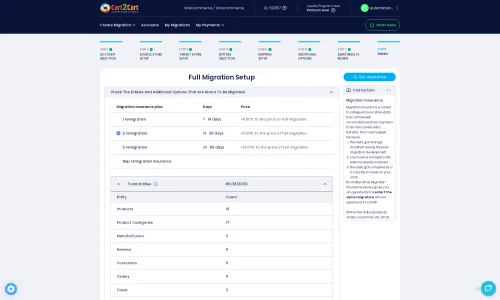
With all options confirmed, launch the full migration. The process will run on secure servers, minimizing downtime for your existing digiSHOP store and allowing you to monitor progress.
Post-Migration Steps
Completing the data transfer is a significant milestone, but the journey doesn't end there. Several post-migration steps are essential to ensure your new Shopware store is fully optimized and ready for business.
- Thorough Review and Testing: Once the migration is complete, meticulously check your new Shopware store. Verify that all products (SKUs, pricing, images, descriptions), categories, customer accounts, and order history have been accurately transferred. Test the entire purchasing flow, from adding items to the cart to checkout and order confirmation.
- SEO Optimization and 301 Redirects: If you enabled 301 redirects during migration, verify their functionality. If not, implement them manually to direct traffic from old digiSHOP URLs to their new Shopware counterparts. Update your sitemap in Google Search Console and monitor your SEO rankings to maintain visibility and link equity.
- Theme and Extensions Configuration: Install and customize your chosen Shopware theme. Integrate any necessary third-party extensions or plugins that provide functionalities crucial for your business operations, such as payment gateways, shipping solutions, or marketing tools.
- Update DNS and Go-Live: Once you are confident in your new Shopware store's functionality, update your domain's DNS settings to point to your new Shopware installation. This is your official go-live moment!
- Decommission digiSHOP: After your Shopware store is fully operational and you've confirmed all data and functionality, back up your old digiSHOP store one last time and then consider decommissioning it.
Migrating from digiSHOP to Shopware via CSV import, while requiring careful preparation, is a manageable process that opens up new avenues for your e-commerce growth. By following this guide, you can ensure a smooth, efficient, and successful transition to your new, powerful Shopware platform.
Ways to perform migration from digiSHOP to Shopware
Automated migration
Just set up the migration and choose the entities to move – the service will do the rest.
Try It Free
Data Migration Service Package
Delegate the job to the highly-skilled migration experts and get the job done.
Choose Package

Benefits for Store Owners

Benefits for Ecommerce Agencies
Choose all the extra migration options and get 40% off their total Price

The design and store functionality transfer is impossible due to digiSHOP to Shopware limitations. However, you can recreate it with the help of a 3rd-party developer.

Your data is safely locked with Cart2Cart
We built in many security measures so you can safely migrate from digiSHOP to Shopware. Check out our Security Policy
Server Security
All migrations are performed on a secure dedicated Hetzner server with restricted physical access.Application Security
HTTPS protocol and 128-bit SSL encryption are used to protect the data being exchanged.Network Security
The most up-to-date network architecture schema, firewall and access restrictions protect our system from electronic attacks.Data Access Control
Employee access to customer migration data is restricted, logged and audited.Frequently Asked Questions
Will my existing digiSHOP store design and theme transfer to Shopware?
Should I use an automated tool or hire an expert for digiSHOP to Shopware migration?
How long does a digiSHOP to Shopware migration typically take?
What data entities can be migrated from digiSHOP to Shopware?
What factors influence the cost of migrating from digiSHOP to Shopware?
Will my digiSHOP store experience downtime during migration to Shopware?
Is my data secure during the digiSHOP to Shopware migration process?
How can I prevent SEO ranking loss when migrating from digiSHOP to Shopware?
Can customer passwords be migrated from digiSHOP to Shopware?
How can I verify data accuracy after my digiSHOP to Shopware migration?
Why 150.000+ customers all over the globe have chosen Cart2Cart?
100% non-techie friendly
Cart2Cart is recommended by Shopify, WooCommerce, Wix, OpenCart, PrestaShop and other top ecommerce platforms.
Keep selling while migrating
The process of data transfer has no effect on the migrated store. At all.
24/7 live support
Get every bit of help right when you need it. Our live chat experts will eagerly guide you through the entire migration process.
Lightning fast migration
Just a few hours - and all your store data is moved to its new home.
Open to the customers’ needs
We’re ready to help import data from database dump, csv. file, a rare shopping cart etc.
Recommended by industry leaders
Cart2Cart is recommended by Shopify, WooCommerce, Wix, OpenCart, PrestaShop and other top ecommerce platforms.
Trusted by eCommerce dominators since 2009















Really great service. We migrated an old Gambio shop to Shopware. The Shopware internal tool was not compatible to that Gambio version so we needed another tool to migrate products and customer data. The support of cart2cart was very nice and helped us with some issues we had with that old Gambio Version.
We will use the service of cart2cart in futures projects too!
Review source
Migrated from an old magento version to shopware. We had some custom issues concerning article variants, prices, images and so on. The support team was always very fast and capable. They did a great job on the adjustments. We definitely recommend Cart2Cart as a migration service!
Review source

Great Solution! Excellent Support team which helped to migrate my store data from Magento to Bigcommerce in no time. Cart2Cart developed a custom solution to which helped me to Migrate my Blog Data too. I will surely use their service on my upcoming projects.
Review source

Migration from Shopify to BigCommerce was exactly what I need it. Customers information, orders, products description and images were displayed in my new platform perfectly. Additionally, the support team were very helpful and patience while I was doing all of this process. I highly recommend it!
Review source

Working with Cart2Cart on a recent Yahoo Store to BigCommerce Store migration was a pleasure. The support was very helpful in getting to my end solution. I would definitely recommend their service for anyone looking to migrate data between these platforms.
Review source

Solid work on the cart2cart migration from Magento to BigCommerce! Also, they helped me a lot for the data re-migration due to an accidental deletion on BigCommerce I definitely would recommend Cart2Cart 🙂
Review source
I have been very happy with the service and support of Cart2Cart in migrating from an older WebAsyst based e-commerce site to a much more modern CS-Cart based one. Worked perfectly!
Review source
Very good support. They migrated our store from Big Cartel to Magento, and were very cooperative during all this process. Thank you team. I recommend them to everyone
Review source
I have successfully used Cart2Cart to migrate products & categories from DrupalCommerce to Magento. It’s easy, affordable and they offer decent support (no I’m not affiliated with them).
Review source
we have already contracted the service three times to migrate from prestashop to magento. We were very well catered for. I recommend!
Review source