
eCommerce is an open-access, competitive market, where winner takes all and loser gets nothing. This way or no way. So, how not to hit the bumps along the road? Fortunately, we’re aware of all eShopping trends and ready to reveal you a few secrets, as ever. To avoid common pitfalls, consider these essential pre-migration tips.
Cannot match GoDaddy to BigCommerce? Challenging goal, but not impossible. Our eye-opening eCommerce platforms comparison will make everything right and help you make up your mind. Forget the hype, we’ll show you all their unvarnished pros and cons and select the champion. Welcome to the clash of titans!
GoDaddy vs BigCommerce: Chances of Victory
Intense competition between shopping platforms makes hard to compare such giant sales panels as GoDaddy and BigCommerce. Today it’s not enough for them to be just good. They must be top of the line to attract and keep new customers.
Both carts are great fits for small and mid-size businesses. Actually, their similarity ends here.
Simply put, GoDaddy is a leading web hosting service, well-known when it comes to domain registration and online marketing. It’s loaded with features and aims to offer competitive value. GoDaddy provides a variety of services and aims to be a one-stop shop for all of your eCommerce needs. Is something better? Yes, if you know where to look.
BigCommerce is hands down one of the most robust solutions to start and run your eStore on. If you plan on having truly beautiful, flexible, popular and profitable online shop, you’re in need of such all-in-one sales panel. It’s a platform of choice for famous brands like NFL’s Carolina Panthers, PayPal Here, Toyota, Ford UK, Ben & Jerry’s, Gibson Guitars, Paul Mitchell and Kodak. So, what attracts it to users? Let’s look behind the scenes.
Pocket Store
A significant percentage of time spent on smartphones is using apps. Thus it’s increasingly important to have an eCommerce website that is mobile friendly, as a majority of online shoppers using their mobiles or tablets to make purchases.
While GoDaddy's website builder has evolved to include responsive design, it historically offered less granular control over mobile site appearance compared to dedicated eCommerce platforms. Users seeking highly customized mobile experiences might find it less flexible, meaning careful review is recommended to ensure optimal display across all devices. Hopefully, you know how crucial the first look is to a potential customer.
As for mobile responsiveness, on a scale of 0 to 10 BigCommerce gets 11. All its templates are perfectly designed and viewed on smartphones, tablets, and desktops. But it’s just icing on the cake. For those who like to keep on top of trends, BidCommerce themes run 'Accelerated Mobile Pages' (AMP), which can have some positive SEO implications as well. This format is good at reducing the number of mobile users who leave your eStore as a result of your content loading too slowly. By delivering clients enjoyable eShopping experience you'll get a higher percentage of engaged visitors and potentially sales.
Money Matters
The best price is non-pricing, we know. But each advanced store owner understands that everything has a value. Especially, if it comes about the worthwhile shopping cart.BigCommerce offers
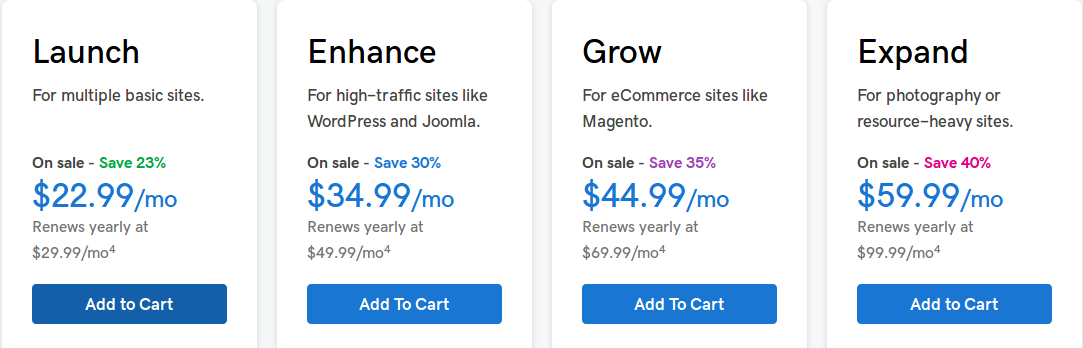
GoDaddy’s hosting plans have various tiers, with introductory pricing typically starting from around $15-$150 per month, depending on the plan and promotional offers. Keep in mind that domain names may be an additional cost after the first year. Its e-commerce plans offer features like credit card payments and client management tools, with prices scaling up based on the features included. Premium commerce plans can cost significantly more per month. After buying your web hosting package, you can also use GoDaddy’s integrated Website Builder and Marketing platform.

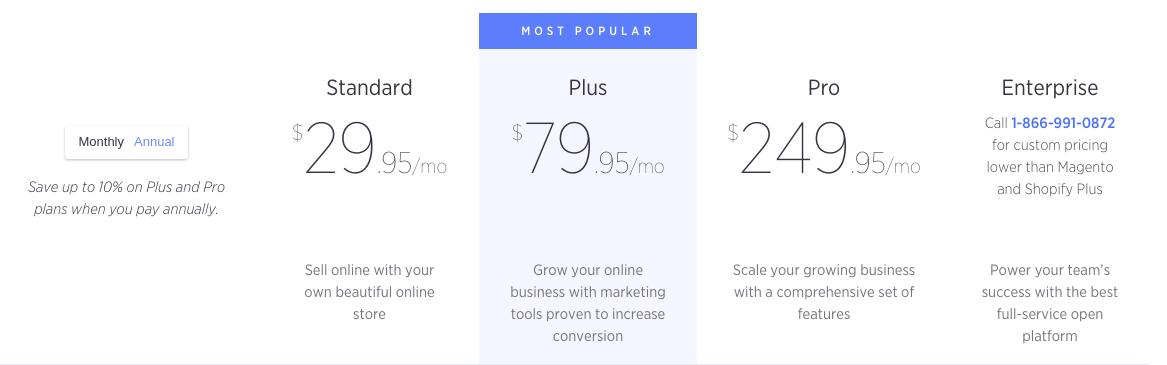
BigCommerce offers three main month-to-month pricing ranges, typically starting from around $40 (Standard) to over $450 (Pro) when billed annually, with slightly higher month-to-month rates. The Enterprise Plan was designed for large business and corporates. Its price depends on your advanced functionality requirements. A discount is available for the 'Plus' and 'Pro' plans if you purchase an annual package. We all fell for sales, face it.
So, if you bet on greed and cheaper but limited store builder, BigCommerce isn’t something for you. But if you are looking for an industry leading, fast-growing and features-packed shopping platform to run your business, BigCommerce is definitely a candidate for you to consider.
For All Tastes and Budgets
Have you ever bumped into a gap between how you envision something on the webpage and how it actually turns out? We’ve all been here. But keep calm, you’ll not be frustrated with these platforms design possibilities. Exactly the opposite, they’ll exceed your highest expectations.
GoDaddy includes a massive library of free, flexible and modern themes sorted by industry. Seriously, there are multiple templates even for the most surprising categories. You can filter them by sections, for example, sport, food, photography, pets, travel, etc. This subdivision will dramatically simplify your selection process.
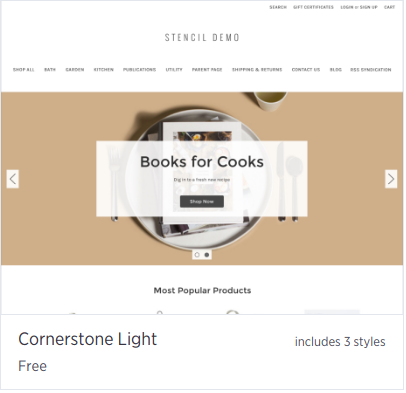
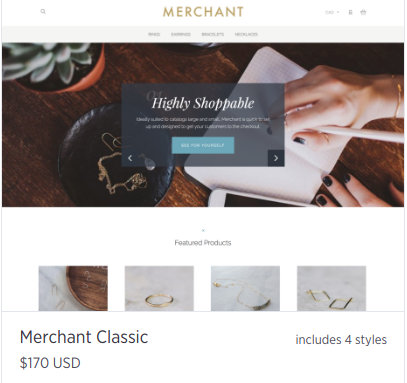
But with BigCommerce design tools you’ll make customers eyes really light up in your eStore. It offers you over a dozen free and many hundreds of paid premium templates (typically priced from around $170 to $400) to dress up an online store in the best way.Their multipurpose nature and stylish look satisfy even the most demanding guests. If you’d like to modify the storefront by yourself, BigCommerce allows the freedom to do so. What’s more important, ALL designs are optimized for mobile viewing. You do want to make your website attractive to customers on the move, don’t you?
Enhanced Functionality
While GoDaddy previously relied primarily on built-in features, its Websites + Marketing platform now includes an App Market, allowing for extended functionality. However, some core features, such as blogging, might still be considered less comprehensive compared to specialized platforms, meaning users might need to explore apps for advanced capabilities.
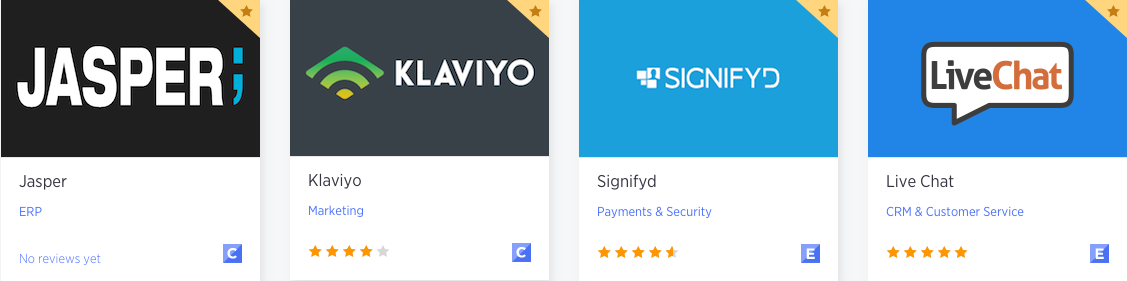
BigCommerce has on offer over a thousand add-ons, and while some apps come with extra expense, a good number of them are free. For example, make packaging a little easier, generate and print shipping labels with Shippo. Connect your site to Trustpilot and increase your brand visibility. Whatever you do, don’t underestimate the importance of additional features, especially when considering our additional migration options. To ensure your new platform is ready, always review how to prepare your target store for migration. They’ll help you bend to a customer instead of asking the customer to bend to you.
Knockout Game
Summing up GoDaddy vs BigCommerce review, we can decide who comes out on top.
GoDaddy is something you may like, but not fall in love with. It’s far from fulfilling many eCommerce needs or requirements and definitely has a room for improvement. But to become the best, you should always be looking at how to step your business up a level. GoDaddy’s hardly much use when it comes to perfection.
BidCommerce has a superior product, analytics, marketing, customer interfaces built-in, with access to many excellent, valuable tools that automate and enhance your store. In addition, it’s pretty easy to use, and you can create an eStore and get it live in a matter of minutes. With this panel, you’re in safe hands day or night.
Finally, if you’re not getting better, you get worse. Don’t be afraid, Cart2Cart won’t allow that. If you’re ready to perform a BigCommerce migration, its official partner on our behalf will do everything for you in the best possible way. For more tailored support, check our Migration Insurance Service. Still have doubts? Try Free Demo and get rid of them. Keep in touch with all eCommerce trends and good luck with your new BigCommerce store.
Monthly Update – March 2026
March 2026 sees continued emphasis on AI integration and robust data security in eCommerce migrations. As businesses transition between platforms like GoDaddy and BigCommerce, the focus isn't just on data transfer but on building an infrastructure capable of advanced personalization and predictive analytics. Modern migration strategies increasingly involve leveraging AI tools for customer segmentation, optimizing product recommendations, and automating marketing workflows right from the outset on the new target store. This proactive approach ensures that the re-platforming effort results in an intelligent, scalable online presence ready for future growth. Furthermore, with evolving global data privacy regulations, ensuring comprehensive data security and compliance throughout the migration process is paramount. Merchants are prioritizing platforms and migration services that offer stringent security protocols and clear guidelines for handling sensitive customer information. Neglecting these aspects can lead to significant reputational and legal risks. A successful migration in today’s landscape is one that not only moves your store but transforms it into a more secure, intelligent, and customer-centric operation, setting the stage for long-term success in a competitive market.
For more details, explore our FAQ section or schedule a call with a migration expert.