

Loaded Commerce to Shopify Migration - Step-by-Step Guide & Expert Services
Loaded Commerce to Shopify migration made seamless. Ready to move Loaded Commerce store to Shopify? Our automated service ensures a secure, swift, and accurate transfer of all your crucial data, preserving SEO and guaranteeing zero downtime. Effortlessly switch from Loaded Commerce to Shopify with confidence. We simplify the complex process to transfer data, whether you prefer our detailed step-by-step guide for DIY users or desire our expert 'done-for-you' service. Start your reliable Loaded Commerce to Shopify migration today!
What data can be
migrated from Loaded Commerce to Shopify
-
Products
-
Product Categories
-
Manufacturers
-
Customers
-
Orders
-
Reviews
-
Multiple Languages
- Name, SKU, Full Description, Status, Images in Description, Manufacturer.
- Price, Special Price.
- URL, Meta Title, Meta Description.
- Product Image, Additional Images.
- Quantity, Manage Stock, Stock Status.
- Weight.
- Options(Name), Product Attributes(Name, Values).
- Product Variants(Weight, Quantity, Additional image).
- Name.
- URL, Meta Title, Meta Description.
- Category Images.
- Name.
- First Name, Last Name, Email, Newsletter.
- Customer Billing Address(First Name, Last Name, Company, Address 1, Address 2, Country, State, City, Zip Code, Telephone).
- Customer Shipping Address(First Name, Last Name, Company, Address 1, Address 2, Country, State, City, Zip Code, Telephone).
- Order Date, Order Status , Order Products(Name, SKU, Option), Custom Order Status, Product Price, Quantity, Discount Price, Tax Price, Shipping Price, Order Comments.
- Customer Name, Email, Billing Address(First Name, Last Name, Company, Address 1, Address 2, Country, State, City, Zip Code, Telephone).
- Shipping Address(First Name, Last Name, Company, Address 1, Address 2, Country, State, City, Zip Code, Telephone).
- Created Date , Status, Rate, User Name , Comment, Product.
- Yes.
- Name, SKU, Full Description, Status, Images in Description, Manufacturer.
- Price, Special Price.
- URL, Meta Title, Meta Description.
- Product Image, Additional Images.
- Quantity, Manage Stock, Stock Status.
- Weight.
- Options(Name), Product Attributes(Name, Values).
- Product Variants(Weight, Quantity, Additional image).
- Name.
- URL, Meta Title, Meta Description.
- Category Images.
- Name.
- First Name, Last Name, Email, Newsletter.
- Customer Billing Address(First Name, Last Name, Company, Address 1, Address 2, Country, State, City, Zip Code, Telephone).
- Customer Shipping Address(First Name, Last Name, Company, Address 1, Address 2, Country, State, City, Zip Code, Telephone).
- Order Date, Order Status , Order Products(Name, SKU, Option), Custom Order Status, Product Price, Quantity, Discount Price, Tax Price, Shipping Price, Order Comments.
- Customer Name, Email, Billing Address(First Name, Last Name, Company, Address 1, Address 2, Country, State, City, Zip Code, Telephone).
- Shipping Address(First Name, Last Name, Company, Address 1, Address 2, Country, State, City, Zip Code, Telephone).
- Created Date , Status, Rate, User Name , Comment, Product.
- Yes.
Products
Estimate your Migration Cost
Due to Cart2Cart`s flexible pricing policy, the migration price depends on the volume of transferred entities and the additional migration options you select. Simply choose your Source and Target platforms and get the approximate price of your Loaded Commerce to Shopify store conversion right after finishing the free Demo.
How to Migrate from Loaded Commerce to Shopify In 3 Steps?
Connect your Source & Target carts
Choose Loaded Commerce and Shopify from the drop-down lists & provide the stores’ URLs in the corresponding fields.
Select the data to migrate & extra options
Choose the data you want to migrate to Shopify and extra options to customise your Loaded Commerce to Shopify migration.
Launch your Demo/Full migration
Run a free Demo to see how the Cart2Cart service works, and when happy - launch Full migration.
How to Migrate from Loaded Commerce to Shopify: A Step-by-Step Guide
Seamlessly Transition Your E-commerce Store from Loaded Commerce to Shopify
Moving your online store to a new platform is a significant undertaking, but the benefits of replatforming to a modern, scalable solution like Shopify can be transformative. Loaded Commerce, while a capable platform in its time, often lacks the advanced features, extensive app ecosystem, and streamlined user experience that contemporary e-commerce businesses demand. Shopify, renowned for its ease of use, robust features, and extensive app marketplace, offers a powerful environment for growth and innovation.
This comprehensive guide will walk you through the process of migrating your store data from Loaded Commerce to Shopify. Due to the nature of Loaded Commerce's architecture, the most effective method for data extraction will be via CSV file export. We will then import this data into your new Shopify store, ensuring a smooth and efficient transition of your valuable products, customer information, and order history.
Prerequisites for a Successful Migration
Before embarking on your data transfer, adequate preparation is crucial to ensure a smooth transition and maintain data integrity.
- For Loaded Commerce (Source Store):
As Loaded Commerce is not directly supported by standard API connections for migration tools, you will need to export all your store data into CSV files. This includes:- Products (including SKUs, variants, descriptions, images, prices)
- Product Categories
- Customer data (names, emails, addresses)
- Order history (order IDs, customer details, product details, statuses)
- Product Reviews (if applicable, these may require a separate process or app on Shopify)
- CMS Pages and Blog Posts (export content manually or via plugin if available)
Ensure all your data is backed up before initiating any export processes. For more details on preparing your source store, consult our How to prepare Source store for migration? guide.
- For Shopify (Target Store):
- Set Up Your Shopify Store: Create a new Shopify account or ensure your existing trial/subscription is active. A "Pause and Build" plan on Shopify will block orders, so ensure your plan is appropriate for receiving sales during and after migration.
- Install the Migration App: Shopify requires the Cart2Cart Store Migration App to facilitate the data import. This app will be key to connecting your CSV files to your new Shopify store.
- Disable Notifications: It is highly recommended to disable all customer notifications on your Shopify store during the migration process to avoid sending premature or confusing alerts to your customers.
- Consider Necessary Apps: If you plan to migrate product reviews, be aware that Shopify requires a dedicated app, such as AirReviews, to manage them post-migration.
For a detailed checklist on preparing your target Shopify store, refer to our How to prepare Target store for migration? documentation.
- General Prerequisites:
- Internet Connection: A stable internet connection is essential throughout the migration process.
- Allocate Sufficient Time: Depending on the volume of your data, the migration can take time. Plan accordingly to minimize downtime.
- Backup Your Data: Always maintain comprehensive backups of your Loaded Commerce store's database and files before starting any migration.
Performing the Migration: A Step-by-Step Guide
The migration process is streamlined through a guided wizard, ensuring you transfer your e-commerce assets efficiently.
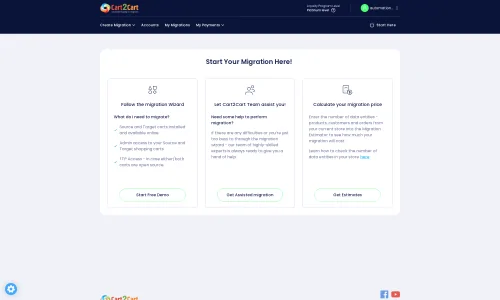
Step 1: Get Started with the Migration Wizard
Begin your migration by accessing the migration wizard. This initial screen will offer options to start a do-it-yourself migration, request expert assistance, or estimate costs.
Step 2: Set Up Your Source Store (Loaded Commerce via CSV)
Since Loaded Commerce is not directly integrated via API for automated migration, we will use CSV files as the source. Select 'CSV File to Cart' as your source platform and proceed to upload the exported data from your Loaded Commerce store.
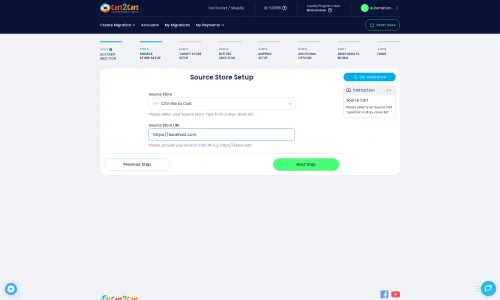
You will need to upload your CSV files containing your products, categories, customers, orders, and other relevant data. For more information on CSV-based migrations, visit our CSV.File Data Migration page.
Step 3: Connect Your Target Store (Shopify)
Next, configure your target store by selecting 'Shopify' from the dropdown menu. You will then be prompted to establish a connection. The recommended method is to install the Cart2Cart app directly from the Shopify App Store. Follow the instructions to link your Shopify store securely.
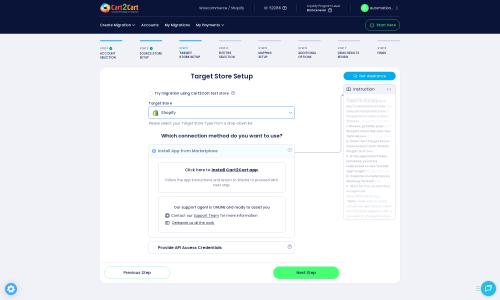
Alternatively, if you prefer, you can provide API access credentials. However, using the app is generally simpler and ensures all necessary permissions are granted automatically.
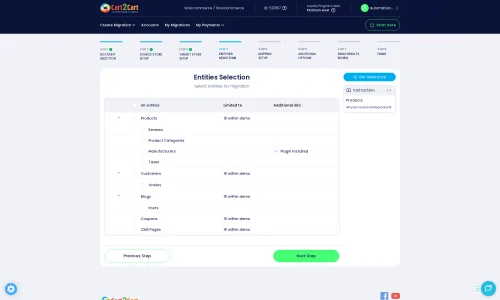
Step 4: Select Data Entities for Migration
In this crucial step, specify exactly what data you wish to transfer from your Loaded Commerce CSV files to Shopify. You can choose to migrate all entities or select specific ones such as products, product categories, customers, orders, reviews, CMS pages, and more. Take care to review the list and ensure all essential data types are selected.
Step 5: Configure Data Mapping and Additional Options
This step allows you to fine-tune your migration. You'll map customer groups and order statuses from your Loaded Commerce data to their equivalents in Shopify. This ensures consistency for your customer data and order management processes.
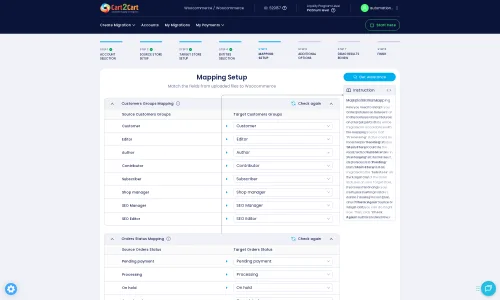
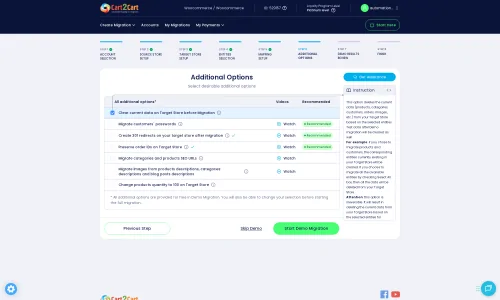
Additionally, choose from a range of additional migration options to tailor the process to your needs:
- Clear Target Store Data: Opt to clear current data on your Target store before migration to avoid duplicates.
- Preserve IDs: Select options to preserve product, customer, and order IDs to maintain historical data consistency.
- SEO URLs & 301 Redirects: Migrate your existing SEO URLs and create 301 redirects to safeguard your SEO rankings and link equity from your Loaded Commerce store.
- Migrate Images in Description: Ensure product images embedded within descriptions are transferred.
- Migrate All Categories: Transfer your entire category structure.
- Migrate Groups to Tags: Convert customer groups from Loaded Commerce into customer tags in Shopify.
Step 6: Run a Free Demo Migration
Before committing to the full data transfer, run a free demo migration. This allows you to transfer a limited number of entities (e.g., 10 products, 10 customers, 10 orders) to your Shopify store. It's an invaluable opportunity to:
- Verify the accuracy of the data mapping.
- Check the integrity of transferred products (SKUs, variants, prices).
- Review customer information and order details.
- Ensure that images and descriptions appear correctly.
The demo helps identify and rectify any potential issues before the complete migration.
Step 7: Initiate Full Data Migration
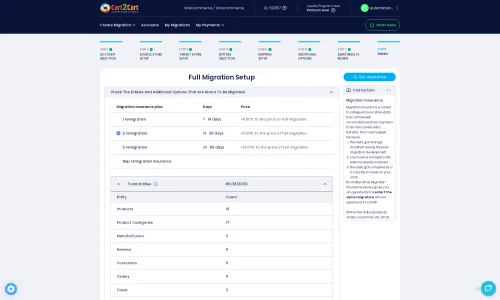
Once you are satisfied with the demo results, proceed with the full migration. This step will transfer all selected data from your Loaded Commerce CSV files to your Shopify store. You can also opt for a Migration Insurance Service for added peace of mind, providing remigrations if any issues arise later.
Post-Migration Steps
Completing the data transfer is a major milestone, but several crucial steps remain to ensure your new Shopify store is fully operational and optimized.
- Thorough Data Verification: Rigorously check all migrated data. Navigate through your Shopify admin to ensure products, categories, customer accounts, and order histories are present and accurate. Pay special attention to product variants, pricing, and image display.
- Configure Store Settings: Set up essential Shopify configurations, including:
- Payment gateways (e.g., Shopify Payments, PayPal, Stripe).
- Shipping zones and rates.
- Tax settings.
- Store policies (refund, privacy, terms of service).
- Email notifications (re-enable these only after full testing).
- Install Essential Apps: Head to the Shopify App Store to install any necessary apps that replicate functionality from your Loaded Commerce store or enhance your new Shopify experience. For example, if you migrated reviews, install an app like AirReviews to display them.
- Update DNS Records: Once you're confident your Shopify store is ready, update your domain's DNS records to point to Shopify. This is the moment your new store goes live to the public.
- Implement 301 Redirects: If you didn't enable the 301 redirect option during migration, or if you have specific URLs that need custom redirection, set these up in Shopify to prevent 404 errors and preserve your SEO rankings and link equity.
- Test Your Store End-to-End: Perform comprehensive testing. Place test orders, process returns, check customer account creation, verify all links, and ensure the entire user experience is flawless on various devices.
- Review SEO: Monitor your search engine rankings and traffic post-migration. Shopify has excellent built-in SEO features, but reviewing your metadata, sitemaps, and performing an SEO audit is always recommended.
- Remove Old Store: Once you are absolutely certain that your Shopify store is fully functional and all data is transferred correctly, you can consider decommissioning your Loaded Commerce store.
Migrating from Loaded Commerce to Shopify can unlock significant potential for your e-commerce business. By following this detailed guide, you can ensure a smooth, secure, and successful data transfer, setting the stage for growth on your new, powerful platform. If you encounter any challenges, do not hesitate to contact us for expert assistance.
Ways to perform migration from Loaded Commerce to Shopify
Automated migration
Just set up the migration and choose the entities to move – the service will do the rest.
Try It Free
Data Migration Service Package
Delegate the job to the highly-skilled migration experts and get the job done.
Choose Package
Custom Migration
Need metafields, SEO URLs, variant rules, or other tailored mapping? Explore customizations built for real merchant demand.
Browse Customizations

Benefits for Store Owners

Benefits for Ecommerce Agencies
Choose all the extra migration options and get 40% off their total Price

The design and store functionality transfer is impossible due to Loaded Commerce to Shopify limitations. However, you can recreate it with the help of a 3rd-party developer.

Your data is safely locked with Cart2Cart
We built in many security measures so you can safely migrate from Loaded Commerce to Shopify. Check out our Security Policy
Server Security
All migrations are performed on a secure dedicated Hetzner server with restricted physical access.Application Security
HTTPS protocol and 128-bit SSL encryption are used to protect the data being exchanged.Network Security
The most up-to-date network architecture schema, firewall and access restrictions protect our system from electronic attacks.Data Access Control
Employee access to customer migration data is restricted, logged and audited.Frequently Asked Questions
What data entities can I transfer from Loaded Commerce to Shopify?
Is my current Loaded Commerce store design transferred to Shopify during migration?
How can I prevent losing SEO rankings when migrating from Loaded Commerce to Shopify?
What factors influence the cost of migrating my store from Loaded Commerce to Shopify?
Should I use an automated tool or hire an expert for my Loaded Commerce to Shopify migration?
How long does a typical Loaded Commerce to Shopify data migration take?
How can I validate data accuracy after switching from Loaded Commerce to Shopify?
Can customer passwords be migrated from Loaded Commerce to Shopify?
Will my Loaded Commerce store experience downtime during migration to Shopify?
How secure is my store data during the Loaded Commerce to Shopify replatforming process?
Why 150.000+ customers all over the globe have chosen Cart2Cart?
100% non-techie friendly
Cart2Cart is recommended by Shopify, WooCommerce, Wix, OpenCart, PrestaShop and other top ecommerce platforms.
Keep selling while migrating
The process of data transfer has no effect on the migrated store. At all.
24/7 live support
Get every bit of help right when you need it. Our live chat experts will eagerly guide you through the entire migration process.
Lightning fast migration
Just a few hours - and all your store data is moved to its new home.
Open to the customers’ needs
We’re ready to help import data from database dump, csv. file, a rare shopping cart etc.
Recommended by industry leaders
Cart2Cart is recommended by Shopify, WooCommerce, Wix, OpenCart, PrestaShop and other top ecommerce platforms.
Trusted by eCommerce dominators since 2009

















This Shopify Migration App worked great to migrate our store from Volusion to Shopify! It transferred over all product descriptions, photos, categories, etc. seamlessly. It’s very easy to use, and the instructions are very easy to follow. Considering the amount of information that we needed transferred, it did not take as long as we had expected.
We did an initial transfer to test out how things would look and how everything would function. It worked great! We purchased insurance with our migration so that we could re-migrate once our shop was closer to being ready to push live, and customer service has been AMAZING in our requests necessary with our remigration. They are very responsive, very informative, and extremely helpful. I would definitely recommend this service if you are looking to transfer your eCommerce site. Everything has been great! Thank you!
Review source

We had a few false starts, but ultimately I was paired with a great customer service representative who did everything necessary to transfer our products correctly from Wix to Shopify. I will absolutely use this company for future client migrations.
Review source

I contacted Cart2Cart’s help desk (direct chat) and had my questions answered very quickly and very politely. I feel much more confident now with my decision to use Cart2Cart to do the data migration from my existing website to Shopify. I was recommended to Cart2Cart for Shopify Migration by a trusted friend and I will definitely recommend them also to anyone looking to migrate. Moving website providers has been a source of stress for me and at least this is one less thing to worry about.
Review source

I had a great experience with Cart2Cart. Reading some of the negative reviews here says more about how complex ecommerce migration is than anything else. I will say that I highly recommend paying the extra $ for their assisted service, which I did. It is totally work the extra $200 or $300 because you get a project manager who is very available, and you get to tweak your migration settings to make sure everything is just right. With the automated tools they offer, you’re on your own. But their customer support on my project was fast and responsive to my questions, and they were able to make any adjustments I needed. I migrated from Virtuemart to Shopify with over 12,000 orders and 4,000 customers. The migration was smooth. They scheduled the last “new data” import for me at a time I chose (within their working hours). And the migration was a success.
Review source

Fantastic App. We migrated from Volusion to Shopify with no problems. Customer Accounts, Inventory, Sales Orders…everything was transferred over.
The only quirk we had was that passwords didn’t transfer over (I’m sure this is a security issue and I have no problem with it at all). The solution was to just send out a mass e-mail to all of our customers asking them to reset their password. Once they reset their password they would still have their shipping information saved as well as the list of their previous orders.
WOULD HIGHLY RECOMMEND THIS APP…but like any migration process be sure you research & make sure you are doing it the correct way so there are no issues. You can’t blame a vendor for a user mistake 🙂
Review source
My experience with Migration for Shopify was positive. I was explained about the prerequisites and peculiarities for my migration from Magneto to Shopify in a detailed manner. The app is very easy to use. The migration was smooth.
Review source
We migrated a large x-cart site to shopify. This was the only app that could help us migrate hundreds of thousands of orders and customers. They were extremely knowledgeable and responsive. They answered my questions quickly and accurately. The initial migration went smoothly with no errors. The final migration at launch (to bring in the newest orders and customers) went equally as well. Data security was also handled to my satisfaction. Definitely would recommend this app.
Review source
The only company I trust for migrating our websites. We migrated one basic and two plus accounts from Magento to Shopify. The help was amazing. Oleksander was a huge help in making sure everything was right. No reason to do it with any other company. Trust the best.
Review source
Migration for Shopify is exactly what I needed when making the huge decision to migrate my website. By reducing the time needed to import products and orders – I can now focus on design and other very important things to ensure a smooth cart to cart transition.
Review source