
Eventually, all the owners of WooCommerce stores deal with the product import/export issue. Whether you’re planning a WooCommerce migration, switching provider/domain host, creating a backup copy of e-shop’s records - make sure to check our easy-to-implement guidelines, including tips on migration preview. We’ll lead you through all the available options on creating and using a CSV file like a pro. For a deeper understanding of planning, check our roadmap for successful e-commerce re-platforming.
Export all the WooCommerce orders effortlessly
Keep in mind that WooCommerce doesn’t have in-built order export settings. However, you can always download a plugin that will help you achieve this functionality. Learn more about installing WooCommerce plugins for advanced features:
- Use the Customer / Order / Coupon Export plugin to preserve store orders and other necessary records in CSV or XML format. The tool also creates automated and bulk exports.
- If you’re looking for an all-in-one solution to export different data types from a parent directory Export-Import plugin, it will suit you best.
- WP ALL Import plugin helps to create custom spreadsheets and XML products files with numberless filters for you to benefit from.
- You can download order figures with the free WP plugin - Advanced Order Export. It’s simple to use and has all the needed options to arrange your goods in charts.
- Simply Order Export - straightforward yet highly-customizable plugin that exports info in CSV.
Export your eCommerce products with plugins
Downloading online products via plugins is the perfect time-saver for those who need the get the CSV or XML file with specific features included. WooCommerce offers users an abundance of export apps to choose from.
If you’re on a tight budget, consider using these free apps:
- Product Import Export - operates only with the CSV formats, supports filters, and different data categories. The plugin can also map columns to the matching product fields.
- WP ALL - this plugin exports products to CSV and XML files in 3 simple steps. It assists in exporting custom Woo-records and can edit export records (rename or rearrange columns and other elements).
- Products & Order plugin - exports data to CSV or XML and may include 100+ field variations together with 30+ special fields.
The most popular paid plugins are:
- The plugin Product CSV Import Suite - creates CSV files that include WoCommerce products or their variations.
- WooEXIM - WP plugin to import/export not only products but other relevant data.
Guidelines on how to Import WooCommerce Products Using a CSV File
Recent versions of WooCommerce have an integrated export/import tool. It supports diverse products and their other variations.
To upload products via CSV to WooCommerce, please proceed as follows:
-
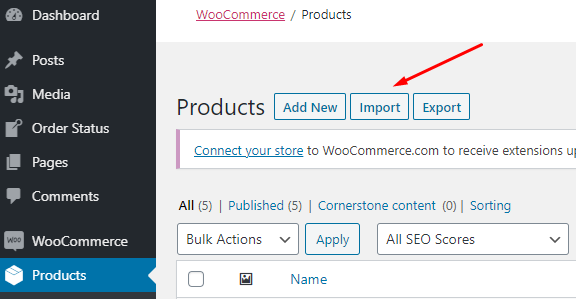
- Sign in to WooCommerce -> Products -> Import. If your store is still empty, just tap the Start Import.
-
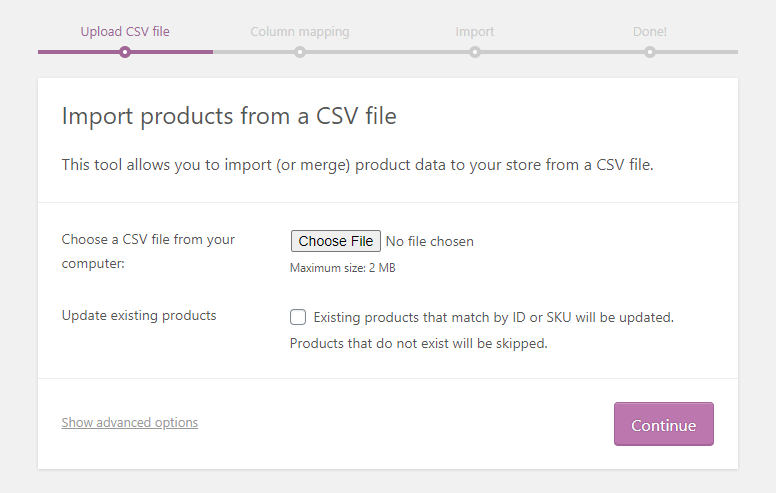
- Upload the CSV file with needed products.
-
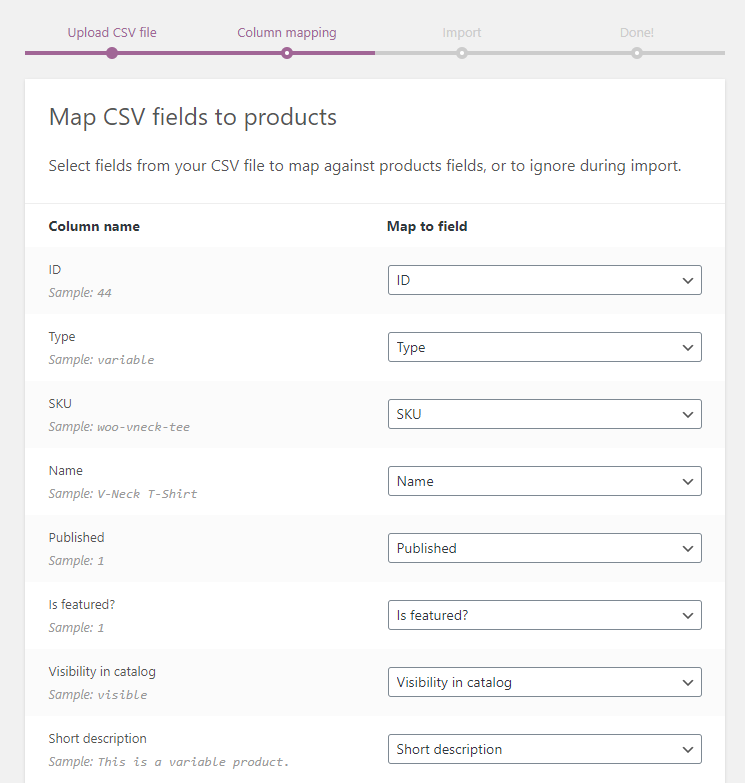
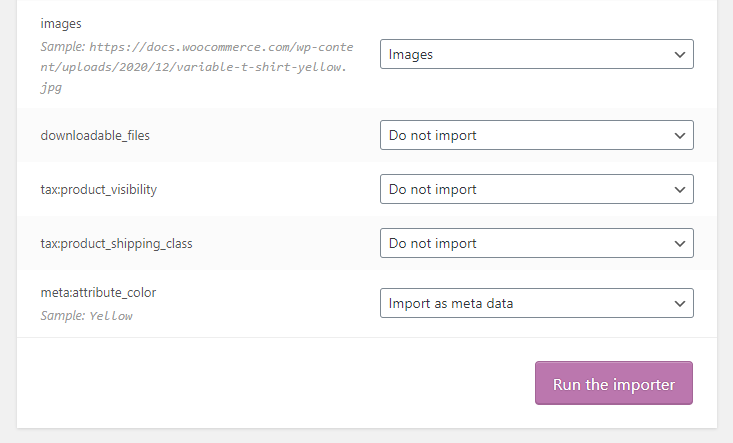
- WooCommerce will try to match the CSV file columns to fields.
-
- You can either adjust these options or set the Do not import status.
-
- Tap the “Run the importer” button to finish the import configurations.
-
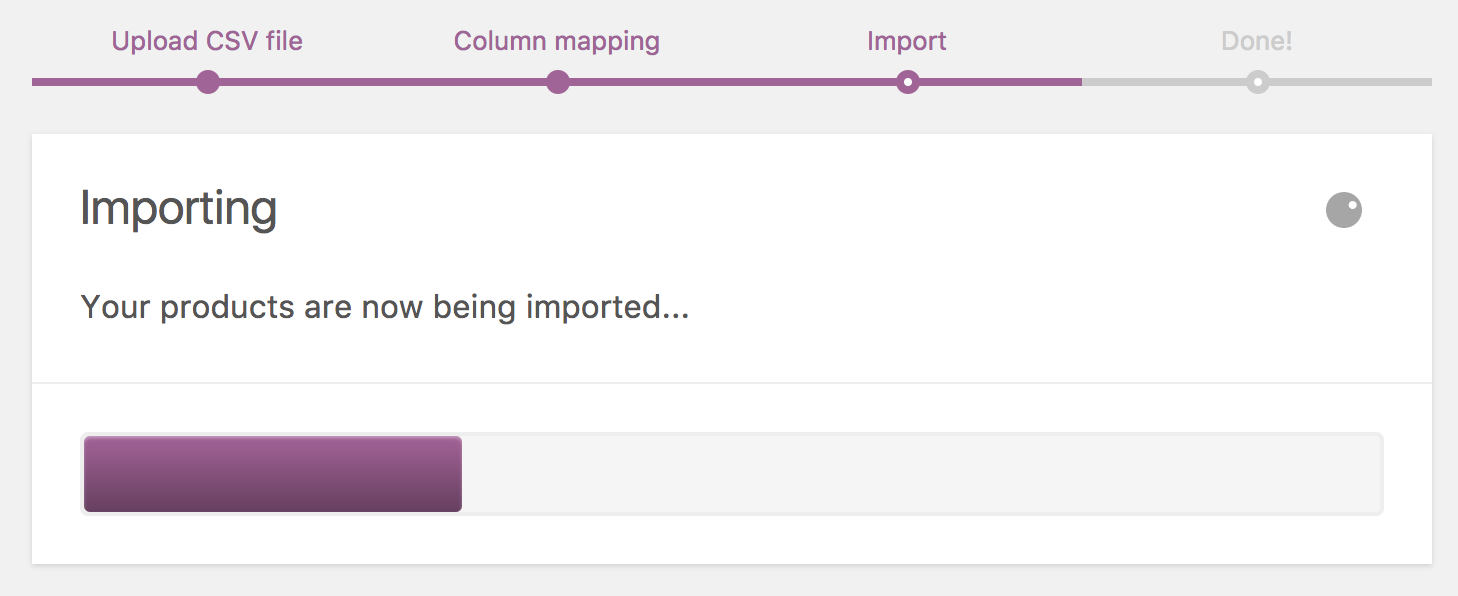
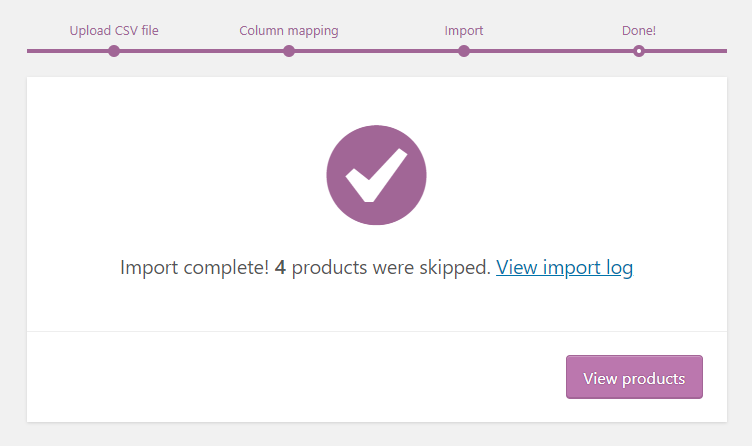
- Wait for the system’s notification and check your WooCommerce online products.
Export your e-trade products from WooCommerce
If you need to download your WooCommerce-related products to one CSV file, we advise you to use the same import/export instrument:
-
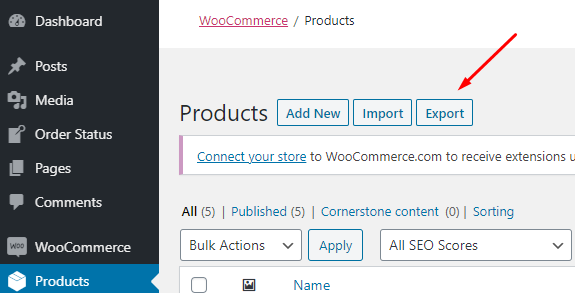
- Log in to your WooCommerce and tap on Products.
-
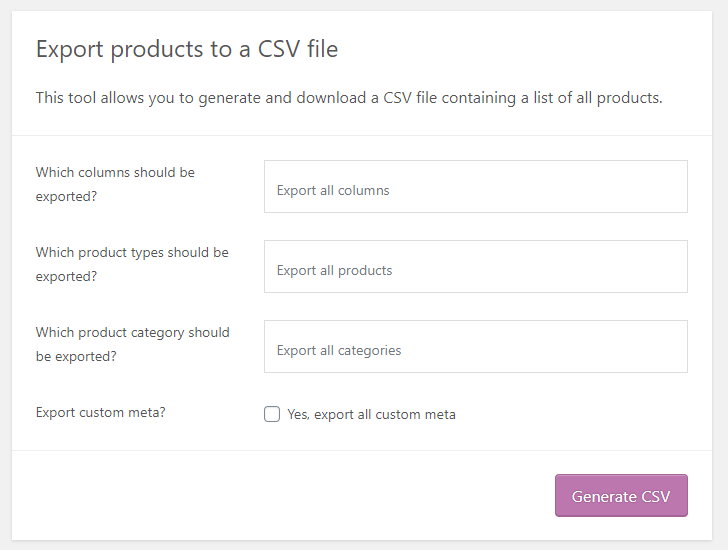
- Next, press the “Export” button. In the pop-up screen, select the data you’d like to export. Click on the dropdown menu to indicate columns/ categories/ products that are to be exported to a CSV file.
-
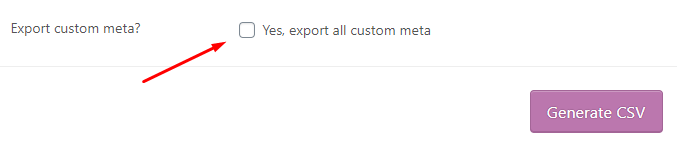
- If you wish to save custom meta, don’t forget to check the corresponding box.
-
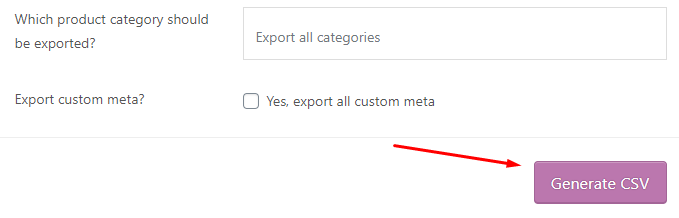
- Tap the “Generate CSV” button to finish import from WooCommerce.
Handling your WooCommerce store’s products is not that hard as it might seem. All you have to do is follow the abovementioned instructions, and you will undoubtedly succeed. Consider exploring our ultimate data migration service for a hassle-free transition.
Have you already tried creating the CSV-s or XML-s? Do you have a favorite plugin? Or, maybe you wish to share your lifehacks on the topic? Feel free to do it in the comments section below!
How to Quickly Export WooCommerce Products - FAQs
How to export WooCommerce products?
- Download and install plugin
- Go to WooCommerce > Product Import/Export
- Choose Export product in CSV format
- Select Export
How to Export a WooCommerce Product Image?
- Use WP All Export and the WooCommerce Export Add-On to export your product images.
- Create a new export for WooCommerce products, as explained in this guide.
- Add the images and attachments to the export as per the WooCommerce Media section.
- Make sure to use the Media > Images subsection of Available Data.
- Run the export and download the export file with the product images.
How to Export One Product From WooCommerce?
- Create a new export in All Export > New Export.
- Select WooCommerce Products from the dropdown list.
- Click on Add Filtering Options and add a rule to target the desired product.
- Proceed to export the product.
- Download the exported WooCommerce product.
Leave a Reply Cancel reply
We'd love to hear your thoughts on Woocommerce product exporting and any best practices you've discovered! Have you encountered any challenges or found effective strategies for exporting products from Woocommerce? Share your experiences, questions, and insights in the comments below. Your feedback could help fellow users navigate the process more efficiently and ensure successful product exports. Join the conversation and contribute to the collective knowledge of Woocommerce product management!
What can we do for you?
p.s. If you’re searching for a tool to transfer your e-records to another platform, Cart2Cart will eagerly help you deal with this task. Try the free demo today!
Monthly Update – March 2026
As we advance into March 2026, the strategic importance of robust product data export processes for WooCommerce stores cannot be overstated. With the increasing complexity of multichannel sales and personalized customer experiences, accurate and flexible data management is paramount. Store owners are now focusing on leveraging export capabilities not just for migration, but also for sophisticated inventory management, dynamic pricing strategies across different marketplaces, and targeted marketing campaigns. Ensuring your product data is clean, consistently formatted, and easily adaptable for various endpoints, such as social commerce platforms or specialized analytics tools, is a key competitive advantage.
A fresh trend emerging this month emphasizes the integration of AI-powered insights with export functionalities. This allows for predictive analysis on product performance and automated optimization of product listings based on real-time market data, ensuring exports are not just about transferring information but about transforming it into actionable intelligence. Prioritizing data enrichment during export preparation—like detailed attribute mapping and SEO-friendly descriptions—will future-proof your e-commerce operations and enhance your global market reach. Stay ahead by refining your export strategies to support scalability and intelligent decision-making.
For more details, explore our FAQ section or schedule a call with a migration expert.