
Magento is one of the world’s most flexible ecommerce platforms. It provides hundreds of thousands of merchants with exciting functionality for their stores, and thousands of extensions to boost performance, such as those available for Shopify. For those evaluating different options, a comparison of open-source vs. hosted platforms can be very insightful.
Upon its initial release in 2016, this version of the shopping cart was a turning point for the platform. Magento 2.1's features and capabilities, which were significant at its release, impressed many and allowed businesses to drive sales and performance. Moreover, it included numerous bug fixes and several impressive enhancements.
When giving a glance at Magento 2.1 Community Edition (CE) and Enterprise Edition (EE) we can’t but notice that both versions offer amazing functionality improvements. Taking into consideration that EE has some extra features, the CE, in its turn, is not left behind and softly accumulates the best modifications.
Magento 2.1. New Features: CE and EE
Upon its introduction, both Community Edition and Enterprise Edition featured impressive and useful improvements. This included numerous new features, functional fixes and security advances, like Braintree hosted fields, improved management interfaces and PayPal In-context check-out, and some other handy updates.
- Braintree Hosted Fields
- Improved Management Interfaces
- search for customer and order information;
- create new products faster and with minimal effort;
- create new content easily.
- PayPal In-Context Checkout
- allows customer to pay via PayPal without leaving your site;
- saves customer details for future purchases and allows to checkout without re-entering their details, a benefit when managing customer groups.
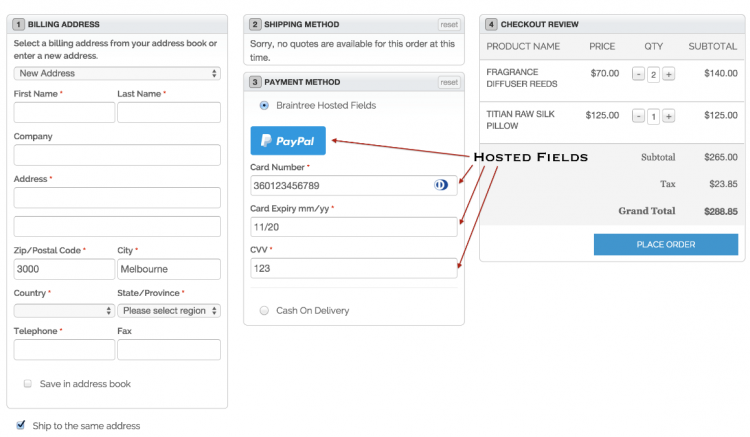
At the time, Braintree improved its integration with Magento 2.1 and added the support, called ‘Hosted Fields’. This technology helps to collect securely all sensitive payment information in checkout and provides you with full control of layout and check out styles. By the way, these ‘hosted fields’ are invisible to customer and exist insensibly within your HTML.
Upon its release, both Magento EE and Magento CE included this important new feature which streamlines the the search for information in Admin panel. Now you can easily:
PayPal functionality in Magento 2.1 included in-context checkout, a new feature at the time, that aimed to boost conversion rates. This feature:
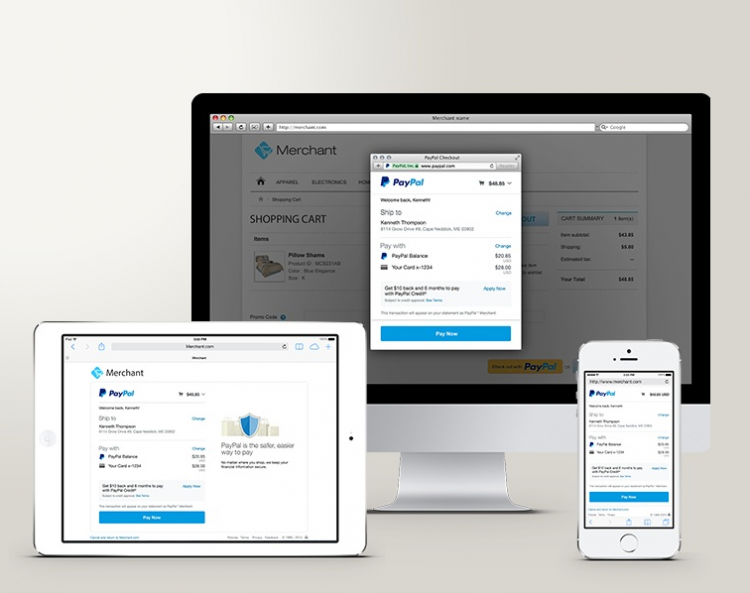
Due to In-Context Checkout feature your customers will have no need to enter a PayPal ID and password when making future purchases.
Other minor Magento 2.1 new features and improvements for CE and EE:
- You can successfully import and export CSV files with data that contains special symbols (those that are not escaped during file processing). For complex data transfers, consider our CSV migration service.
- There are two new web API endpoints that permit you to process refunds from orders to invoices (you don’t need a patch for that now).
- Large catalogs are processed more swiftly and accurately, a benefit often enhanced by ultimate data migration service packages. When migrating extensive data, a migration preview service can ensure everything is transferred as expected. (now the catalog/product indexer doesn't require a large temporary table memory allocation in MySQL for large catalogs).
As mentioned, both versions of Magento 2.1 offered significant improvements upon their release, but there are some that only EE can boast of. Check out what interesting enhancement it can propose to you.
What about new Magento 2.1 EE impressive features?
- Staging and Preview
- Elasticsearch
- User-friendly dashboards
- it facilitated for you creating and scheduling personalized promotions and combining them easily in more extensive marketing campaigns;
- with this improvement now you could preview changes across the store, including products and checkout pages, from the outset;
- Release of Cloud Edition
- Now there was no need of system administrator assistance between your code and deployment, it was fully automated;
- Cloud Edition plan had eight active environments for development and staging available for free;
- You could also possess many inactive environments if you wanted to;
- Now you were able to increase the amount of memory and CPU;
- Manual data transfer or custom scripts - often complex and resource-intensive, requiring advanced technical skills and posing risks to data integrity.
- Hiring a specialized developer or agency - an efficient but typically expensive option, suitable for highly customized needs.
- Utilizing an automated migration service - a straightforward, secure, and cost-effective approach for transferring data. Such services often come with migration insurance options for added peace of mind.
This improvement enables you to stage, schedule, preview and approve different content easily. It also facilitates greatly the task of content management for non tech-savvy user.
It is one of the best search engines that was designed to handle large catalogs. Elasticsearch provides highly relevant results and supports 33 languages out-of-the-box; in Magento 2.1, it replaced Solr.
When Magento 2.1 EE was introduced in the cloud, it aimed to provide entrepreneurs with simplified integration with existing systems, it gave the ability to concentrate on sales and marketing only. Comparing to SaaS commerce, the Cloud Edition reduced a lot expenditure on the deployment and management.
If you decided on Cloud edition, you wouldn't have to deal with infrastructure issues and would have more time for developing your brand, successful marketing strategies, etc.
This was a short review of features, because at the time, Magento 2.1 had much more to offer. Its countless extensions, better performance, and stability were significant reasons to upgrade. For those looking to optimize their current e-commerce operations or planning a platform shift, a clear roadmap for successful re-platforming is essential. You might also find our comprehensive Magento data migration guide helpful for planning your next move.
Migrating from Magento 2.1 to a Modern Adobe Commerce (Magento 2.x) Version
When Magento 2.1 was current, there were various methods to upgrade to it. However, given that Magento 2.1 is now an outdated version, the focus shifts to migrating *from* Magento 2.1 to a more current and supported Adobe Commerce (Magento 2.x) platform. The general approaches for platform transitions include:
Let’s consider using an automated tool like Cart2Cart for migrating *from* your Magento 2.1 store. With this service, you can bypass the complexities of manual data input, plugin installations, and script writing, as all your essential data will be transferred automatically.
Cart2Cart will move your orders, products, customers, attributes, categories and other entities you want from your current Magento to a desired Magento 2.x version automatically. Given that Magento 2.1 is now considered legacy, it's generally recommended to migrate to the latest Adobe Commerce (Magento 2.x) version for optimal performance and security. While Magento 2.1 is now an older release, the service supports various Magento 2.x versions for migration.
What you need for that? Nothing troublesome, just follow couple of simple steps and enjoy your store updated to a desired Magento 2.x version (note: Magento 2.1 is an outdated version; migration to the latest Adobe Commerce is generally recommended):
- Register a Cart2Cart account.
- Provide your current Magento store URL and download the Connection bridge.
- Provide your new Adobe Commerce/Magento 2.x store URL and download the Connection Bridge.
- Choose what entities you wish to transfer.
- Set the Free Demo migration. You can easily check the results of your demo migration to ensure everything is in order.
- Click “Start Migration” to proceed with full data transfer.
Start your Free Demo migration right away! Magento 2.1 was, at the time, a significant advancement for the platform.
Monthly Update – March 2026
March 2026 highlights a continued acceleration in the adoption of composable commerce architectures. Businesses are increasingly moving away from monolithic platforms to a modular approach, leveraging best-of-breed services for various functionalities like Product Information Management (PIM), Content Management Systems (CMS), and advanced checkout solutions. This trend is significantly driven by the pressing need for greater agility, scalability, and unparalleled flexibility to rapidly adapt to ever-changing market demands and sophisticated customer expectations. By 'composing' their e-commerce tech stack with independent, API-first components, merchants gain the power to deploy innovative features at an accelerated pace, experiment freely with cutting-edge customer experiences (such as headless storefronts and personalized mobile apps), and critically, mitigate the risks associated with vendor lock-in. This fundamental architectural shift frequently runs parallel with a strategic platform migration, where outdated legacy systems are thoughtfully dismantled and rebuilt using more manageable, interconnected services. The tangible benefits derived from this approach are substantial, including significantly enhanced site performance, much easier integration with emerging technologies like advanced AI for personalization, and the creation of a far more resilient and future-proof e-commerce ecosystem. Therefore, merchants contemplating a platform overhaul or initial setup in today's landscape should thoroughly research composable options to ensure their new setup is not only robust but also capable of seamlessly evolving with unforeseen future trends.
For more details, explore our FAQ section or schedule a call with a migration expert.