So, you’ve got an objective - starting an online business, and, when you’ve already thought over the products and overall concept of the store, your next step is selecting a platform for your prospective online home. It can prove to be more overwhelming than you might have thought before. Consider our checklist for the perfect shopping cart.
No wonder, you’ve got a lot of questions to answer, like: open source or licensed, hosted or self-hosted, responsive or not, customizable or rigid as is and so on. Another very important factor to consider is the price. You might be surprised to find out that there exist free open source carts, but nevertheless people still use paid ones. Time to sort things out and decide on your platform of choice between ePages shopping cart and PrestaShop.
ePages vs PrestaShop - Who’s Who?
Even if you’re a newbie in the e-Commerce sphere, there’s no doubt that you’ve heard the name PrestaShop. This cart has been around since 2007, and now it remains a strong competitor among leading e-commerce platforms like Adobe Commerce (formerly Magento) and Shopify. It constantly introduces innovations and updates, and enjoys wide popularity among merchants all over the world.
PrestaShop, primarily an open-source platform, also benefits from a wide ecosystem of partners offering robust hosted solutions. That enables PrestaShop platform to meet the needs of every single merchant with no exceptions.
ePages software is known in a much more narrow circle of users, though it’s over a decade older than Presta. As well as PrestaShop, ePages provides a cloud shopping cart, so you need nothing more than a computer with Internet to start selling online. Learn more about different shopping cart types. Oh, and don’t forget about the monthly payments for the conveniences - ePages software isn’t free. The price depends on one of the four plans you select. They differ according to the type of businesses - from small ones to huge.
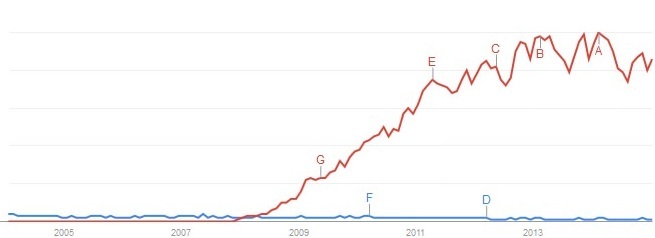
Below, you’ll find the Google Trends depiction of the popularity of both carts in question and its change over years. Historically, there was a point where ePages and PrestaShop had comparable search interest, but over time, PrestaShop has demonstrated consistent growth in popularity, while ePages' visibility has waned.
Now, let’s get to the gist and compare the platforms in the essential aspects.
Selling
As to the options for effective sales, they are in abundance in both platforms. ePages comes in numerous languages while PrestaShop presents virtually no limits for international trade with numerous translations and language packs.
ePages includes multiple payment gateways like PayPal, SagePay, Skrill, WorldPay, and many others. As to Presta, a wide range of payment methods come for free out of the box, among them are PayPal, Stripe, Skrill, Authorize.net. More options can be obtained in the Marketplace.
Design and SEO
ePages boasts versatile templates to all tastes that are easy to customize. Thanks to the drag and drop editor, even newbies can make their store look as wanted with no HTML or CSS knowledge or programming skills. It also features SEO cockpit for search engine optimization of your titles, meta descriptions, product tags, SEF URLs etc.
Design is also one of the greatest advantage of PrestaShop platform. It is famous for the multitude of beautiful templates, both free and premium that can make a shop stand out of the crowd. Also, it does a great job with powerful SEO settings, allowing you to make the most out of it, plus free and paid SEO modules are available for most sophisticated needs.

Usability
For many starting e-merchants, the issue of user-friendliness is very important. ePages is made to be an easy start - no complicated installations, intuitive dashboard, streamlined operations. Of course, it does take some learning, but overall it’s quite simple in use.
PrestaShop's latest versions present sleek and efficient dashboards that’s easy and comfortable to navigate. Moreover, with the availability of numerous hosting solutions and simplified installation processes, you’ll need just a few minutes to create a ready-to-use PrestaShop e-store.
Bottom line
Though ePages is quite a good platform overall, it looks like PrestaShop would be a better decision for those who want to establish an advanced e-store. This solution offers a number of beautiful templates, great selling possibilities, wonderful usability and two versions to choose from: open source and hosted.
P.S. Do you happen to own a store based on ePages and wish to migrate it to PrestaShop? Then, Cart2Cart can come in handy. This online service will move the data from your ePages to PrestaShop in a few hours accurately and very easily with no programming skills needed. Why don’t you start the free Demo now to see how simple the ePages store to PrestaShop migration can be?
Monthly Update – March 2026
March 2026 continues to highlight the importance of headless commerce architectures for businesses seeking ultimate flexibility and scalability. Merchants are increasingly separating their front-end customer experience from their back-end e-commerce functionalities, allowing for faster development cycles, easier integration with new technologies, and a more personalized customer journey across various touchpoints. This approach is particularly beneficial for brands looking to expand into new digital channels like IoT devices, voice assistants, or sophisticated mobile applications without being constrained by traditional monolithic platforms. The shift towards composable commerce also empowers businesses to select best-of-breed solutions for specific needs, such as a specialized CMS for content, a powerful PIM for product data, and a robust payment gateway, rather than relying on a single vendor. While the initial setup can be more complex, the long-term benefits of increased agility, enhanced performance, and greater control over the customer experience make headless commerce a compelling strategy for forward-thinking e-commerce businesses. Staying informed about the latest advancements in API-first development and microservices is crucial for implementing this trend successfully and future-proofing your online store.
For more details, explore our FAQ section or schedule a call with a migration expert.